How a plan is built
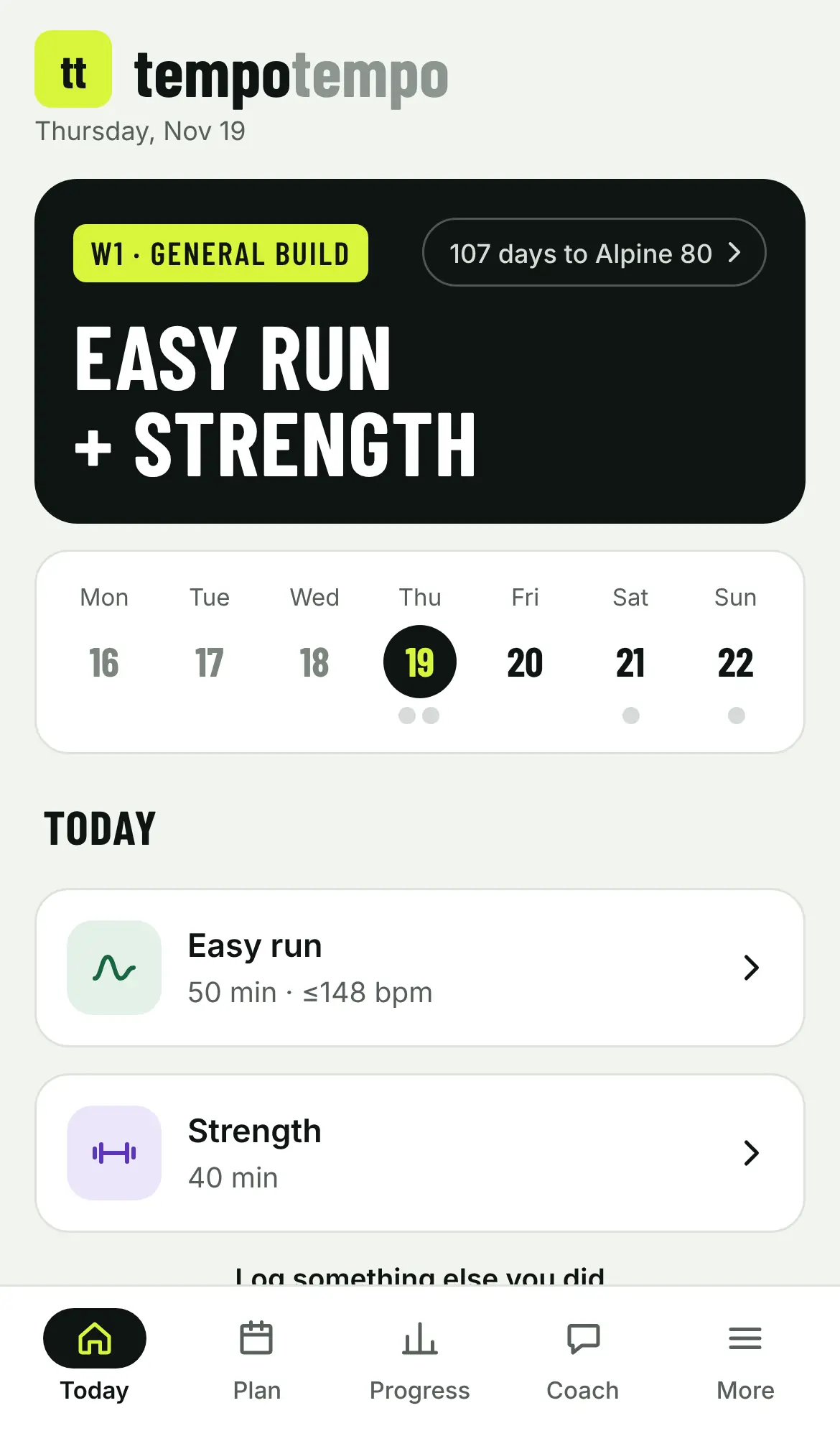
First the season. Then the weeks.
A good coach does not hand over forty weeks of sessions on day one. Neither does tempotempo.
The season
Periods, each with a purpose, a load range, and what you will be able to do at the end of it. You see the shape and agree to it before a single session is written.
The next few weeks
Sessions are written two to four weeks at a time, from what you did in the weeks before, not from a guess made months ago.
The session
Steps, with targets by heart rate, pace or effort, and what to eat on the long ones. Sent to your watch.
More than mileage
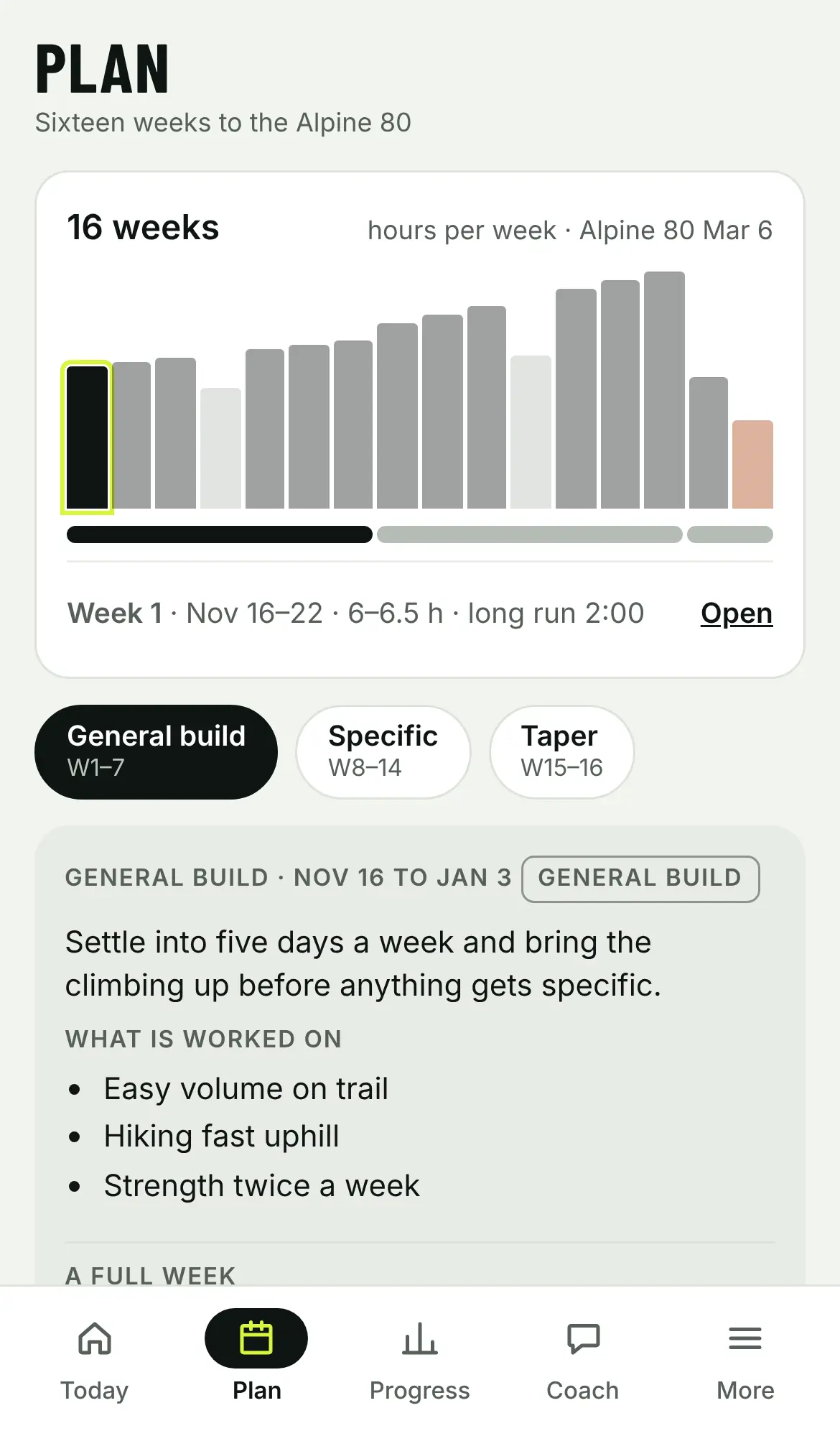
It trains the whole race.
A race asks for more than fitness: eating for hours, the night, long descents, the heat, the cut-offs. Each is brought in early, built up, and rehearsed before the day. A few at a time, because a week only has so much room.
- Eating and drinking
- Strength
- Climbing and fast hiking
- Descending
- Running at night
- Poles
- Heat
- Pacing and cut-offs
- Gear
- Taper and race week
When the week goes sideways
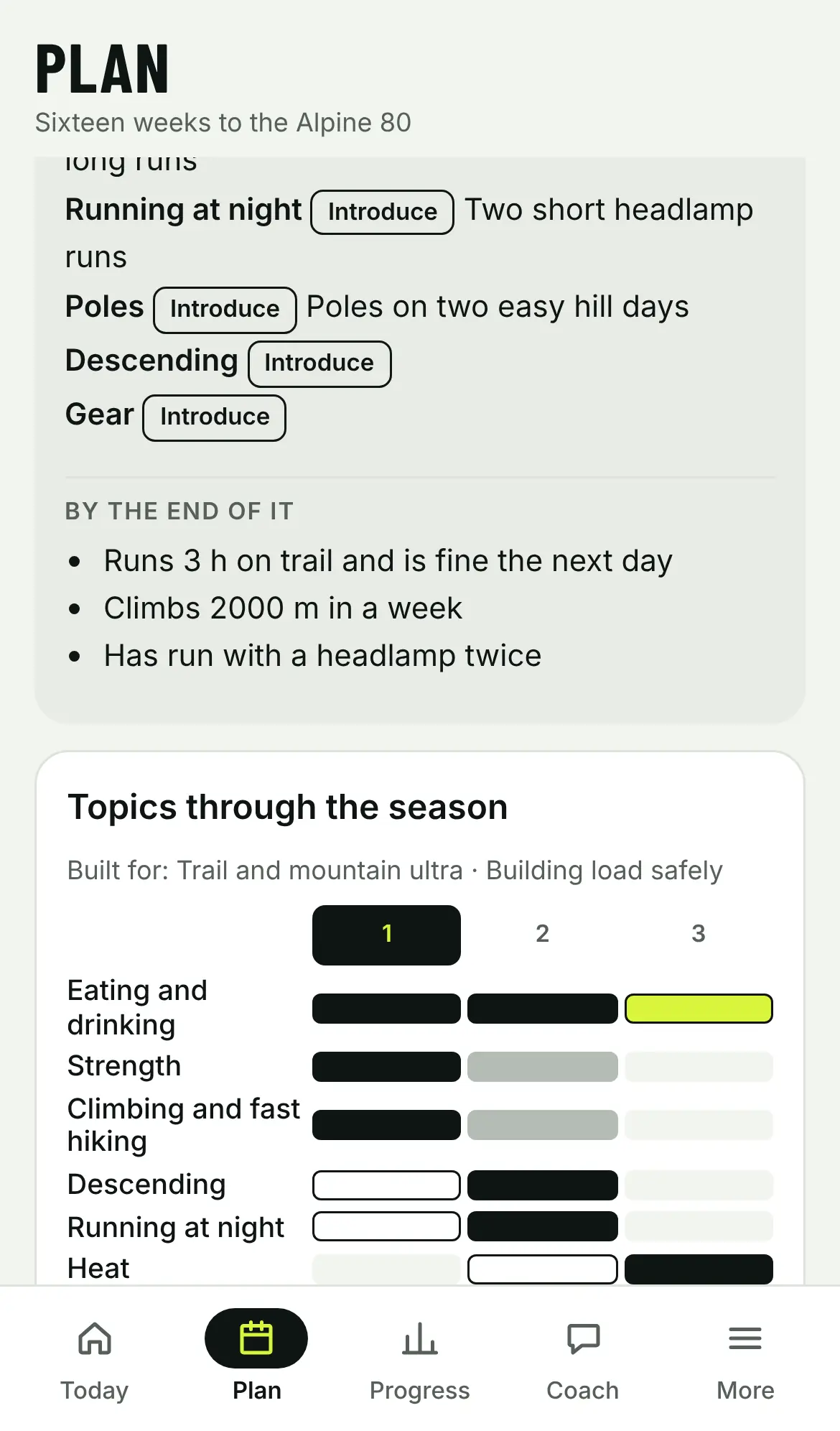
A small change stays small.
Sick for three days? The next two weeks change, not the season. Three weeks lost close to the race? Then it is the season, and the coach lays out the options first. Every change is kept with its reason, so you can always read why your plan looks the way it does.
Sessions on your wrist
Connect a Garmin or a COROS. The coming sessions go to your watch with their steps and targets. On Garmin they follow the plan when it changes.
Advice with its sources
What the coach knows about eating, heat, descending or tapering is written from published research and coaching practice. It says where a number comes from, and when the evidence is thin.
A plan for the day itself
Near the taper: how each stretch of the course is run, what you eat, what you carry, and what to do when it goes wrong. Nothing you have not practised.
Day to day
Run. Tell it how it went.
One screen says what today is for. What you do with it shapes the weeks that follow.
Starts from your history
Connect your watch and it can read up to your last twelve months: weekly hours, climb, long runs, rest. The plan starts from where you are, not from a template.
Nothing without your yes
You say what you are training for and how much room your week has. The coach asks what it still needs, then shows a draft. Nothing becomes your plan until you accept it.
Today, clearly
Today’s session, tomorrow’s, the week, and the days left before your race. Each session has its steps, what it is for, and what to eat and drink on the long ones.
Tell it how it went
A run recorded on a planned day marks it done. Add how hard it felt, whether anything hurt, how eating went. The next weeks are written from that.
Ask for a change
Move, shorten, swap or skip a session, or rethink the plan when work, tiredness or travel gets in the way. The coach reads your logs first, then says what it changed and why.
See where you are
This week against the plan, and your last twelve weeks and months of hours, distance and climb.
The coach
How the coach behaves.
- It is an AI, and says so. It cannot watch you run. It tells apart what your watch recorded, what the research says and its own judgment, and it says when it does not know.
- It pushes back once. Ask for a jump in mileage, a skipped easy week or a run on a sore tendon, and it tells you plainly why it would not. Then it is your call.
- It is not a doctor or a physio. It does not diagnose. Pain that does not settle is theirs to look at, and what your clinician says comes before the plan.
- Its memory is yours to read. It keeps short notes about you: an old injury, a preference, a limit on your week. You can read, correct or delete every one.
Before you ask for an account
Honest limits.
- It is new
- tempotempo is an early project, run by one person, and still changing. Accounts are opened by approval unless sign-up is open.
- It takes its time
- A season and its first weeks take a few minutes to write. It does not answer in a second.
- Two watch brands
- Garmin and COROS for now. The COROS connection is the newer of the two and has been tried on fewer accounts.
- No extras
- No social feed, no leaderboard, no likes. Nothing to pay for now.
- A web app
- It runs in your phone’s browser: open it and add it to your home screen. There is no app store download.
Your data is used to build your plan and for nothing else. Privacy policy
Start where you are.
Tell the coach what you are training for. It asks a few questions, shows you the season, and writes your first weeks.